
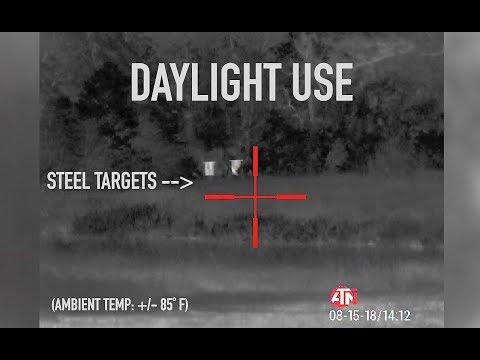
Harnessing the Heat: Can You Use a Thermal Scope During the Day?
Introduction: Unlocking Thermal Scopes for Daytime Use
For many, the mention of thermal scopes conjures images of covert nighttime operations or wildlife observation under the cloak of darkness. These advanced optical devices have long been synonymous with low-light environments, leading to a common misconception: can you use a thermal scope during the day? The resounding answer is yes, and not only is it possible, but it also offers unique advantages that traditional optics simply cannot provide. Thermal scopes operate on a fundamentally different principle than conventional visible light or night vision devices, detecting heat signatures rather than relying on ambient light. This allows them to function effectively around the clock, unveiling a world of thermal information that remains invisible to the naked eye, even under the brightest sun. In this article, we will delve into the science behind daytime thermal imaging, explore its numerous benefits, address the challenges, and provide insights into optimizing performance when the sun is high.
The Science of Daytime Thermal Imaging
To understand how a thermal scope performs during the day, we must first grasp its core operating principle. Unlike night vision devices that amplify existing visible light, thermal scopes detect infrared radiation, which is emitted as heat by all objects above absolute zero. This electromagnetic radiation exists across a spectrum, and thermal imagers typically operate in the mid-wave infrared (MWIR) or long-wave infrared (LWIR) bands, wavelengths that are invisible to the human eye.
How Thermal Detection Works
At the heart of every thermal scope is a specialized sensor, often a microbolometer array. This sensor captures the infrared energy emitted by everything in its field of view. Each tiny element (pixel) on this array measures temperature with high precision. The scope’s internal processor then translates these temperature differences into an electrical signal, which is displayed as a visual image on a screen. Warmer objects typically appear brighter or in distinct colors (depending on the chosen palette), while cooler objects appear darker. This process creates a “heat map” of the environment, rather than a visual representation based on light and color.
Independent of Visible Light
The crucial distinction is that thermal imaging is entirely independent of visible light. Whether it’s bright daylight, complete darkness, or even conditions like fog, smoke, or light vegetation, thermal scopes continue to detect heat. They don’t “see” sunlight; they “see” heat. This means that the core functionality of a thermal scope remains consistent regardless of the ambient light conditions. The sun does, however, introduce environmental factors that can influence the quality of the thermal image, primarily by affecting temperature contrasts.
Benefits of Using Thermal Scopes During the Day
While often overshadowed by their nighttime prowess, thermal scopes offer a compelling suite of advantages for daytime use across various applications, from hunting and wildlife observation to security and search and rescue.
Enhanced Detection Through Obstructions
One of the most significant benefits is the ability of thermal scopes to see through light to medium cover that would obscure visible light. This includes:
- Dense vegetation and brush: Animals hidden in tall grass, thickets, or under canopy cover can be easily detected by their body heat, even when visually camouflaged. The heat signature passes through gaps in the foliage, revealing what visible light cannot.
- Atmospheric obscurants: Thermal imaging excels in conditions like fog, mist, smoke, and dust, where visible light is scattered or absorbed. Infrared radiation can penetrate these particles much more effectively, providing clarity when traditional optics are rendered useless.
Unaffected by Camouflage and Shadows
Animals are often masters of camouflage, blending seamlessly into their surroundings. Thermal scopes bypass this visual trickery entirely. Since they detect heat signatures rather than color patterns, an animal’s body heat will stand out against a cooler background, regardless of its coat color or the shadows it hides in. This makes them invaluable for:
- Wildlife monitoring: Easily spotting animals that are adept at hiding, such as bedded deer in shaded areas.
- Security applications: Identifying potential intruders or threats that might be blending into complex visual landscapes in urban or natural settings.
All-Day Functionality and Versatility
Unlike traditional night vision devices that can be damaged by bright light and are primarily designed for low-light scenarios, thermal scopes are fully operational 24/7. This round-the-clock usability makes them incredibly versatile.
- Game recovery: After a shot, thermal scopes can expedite game recovery in challenging terrain or fading light by quickly locating the downed animal’s residual body heat.
- Monitoring and surveillance: Whether for property security or observing wildlife, thermal scopes provide consistent performance from dawn to dusk and beyond.
Superior to Night Vision in Daylight
It’s important to distinguish between thermal imaging and night vision. While both enhance visibility in low light, night vision amplifies existing ambient light and can be damaged by bright sunlight. Digital night vision can handle daylight better but still relies on light. Thermal imaging, by contrast, is completely unaffected by light and works flawlessly in bright daylight, making it a superior choice for daytime detection when light conditions are not a factor.
Challenges and Considerations for Daytime Performance
While thermal scopes are undeniably functional during the day, their performance can be influenced by several environmental factors. Understanding these challenges is key to optimizing their effectiveness.
Reduced Temperature Contrast
The primary challenge for daytime thermal use is the reduction in temperature contrast.
- Solar heating: Direct sunlight heats up surfaces like rocks, soil, pavement, and vegetation. This can reduce the temperature difference between an animal’s body heat and its surroundings, making the target less distinct. On very hot days, everything might emit similar heat, making it harder for the scope to differentiate.
- Midday heat: Image quality can decrease in midday heat, especially in open fields under direct sun, where temperature differences are compressed. The contrast between a warm-blooded animal and a sun-baked background may not be as sharp as against a cool night environment.
Environmental Factors
- Heat mirage: On very hot days, particularly over flat, open areas or hot surfaces like roads, temperature differences in the air can cause a heat mirage. This atmospheric distortion can make the thermal image appear wavy or blurry, especially at longer ranges.
- Humidity and precipitation: While thermal scopes generally perform better than visible light optics in fog or light rain, heavy rain, thick fog, and high humidity can still reduce effectiveness by scattering or absorbing some infrared radiation.
- Reflective surfaces: Shiny surfaces like metal roofs or ponds can reflect heat, potentially distorting thermal readings. Glass is particularly problematic, as it reflects infrared radiation, making it opaque to thermal sensors.
Device-Specific Limitations
- Resolution and NETD: The quality of the thermal scope itself plays a significant role. Devices with low NETD (Noise Equivalent Temperature Difference) sensors (typically <40 mK) are better at detecting smaller temperature differences, which is crucial for maintaining clarity and detail in low-contrast daytime conditions. Higher resolution sensors also provide clearer images.
- Battery life: Thermal scopes can consume a lot of power. Intensive daytime use may require careful battery management, including spare batteries or external power sources.
- Cost: High-quality thermal scopes, especially those optimized for strong daytime performance, can be a significant investment compared to traditional optics or even some night vision devices.
Optimizing Daytime Performance
To mitigate these challenges, users can employ several strategies:
- Adjust settings: Experiment with the scope’s contrast, brightness, and color palettes (e.g., Black Hot or White Hot) to find the best visualization for specific environmental conditions. High-contrast palettes often work best during the day.
- Choose optimal times/locations: Thermal scopes perform best in shaded or cooler environments during the day. Early morning, late afternoon, or cloudy days offer increased contrast as ambient temperatures are lower or direct sunlight is reduced. Hunting near bodies of water can also enhance contrast.
- Scan slowly: Moving the scope slowly across the field of view can help in spotting subtle heat signature differences that are more critical in daylight.
- Protect the lens: Avoid pointing the thermal scope directly at the sun for extended periods without the lens cap, as this could potentially damage sensitive internal components.
Frequently Asked Questions
Q1: Will direct sunlight damage my thermal scope?
A: No, thermal scopes are generally not damaged by direct sunlight because they detect heat, not visible light. Unlike traditional night vision, which can be overwhelmed or damaged by bright light, thermal devices are designed to operate in any light condition. However, it is advisable to avoid prolonged direct exposure to the sun with the lens cap off, as this can potentially affect sensitive internal parts over time.
Q2: Is thermal imaging better than night vision for daytime use?
A: Yes, thermal imaging is generally better than night vision for daytime use. Night vision devices amplify existing light and are typically unsuitable for bright daylight, with some older models even susceptible to damage. While digital night vision can have a day mode, thermal scopes offer consistent performance by detecting heat signatures, providing advantages like seeing through camouflage or light obstructions regardless of light conditions.
Q3: Why does my thermal scope show less contrast during hot afternoons?
A: On hot days, especially during midday, the sun heats up the surrounding environment (ground, rocks, vegetation). This reduces the temperature difference between objects like animals and their background, making the thermal contrast lower and images less sharp.
Q4: Can thermal scopes see through glass or solid walls?
A: No, thermal scopes cannot see through glass or solid walls. Glass reflects infrared radiation, making it appear opaque to thermal sensors. Similarly, dense obstacles like walls block thermal radiation. While a slight temperature difference might be detected on the surface of a thin wall if a heat source is pressed against it, the scope is not seeing through the material.
Q5: How does weather like rain or fog affect daytime thermal imaging?
A: Heavy rain, thick fog, and high humidity can reduce the effectiveness of thermal imaging by scattering or absorbing some infrared radiation. However, thermal scopes generally perform much better in these conditions than visible light cameras or the human eye, as infrared radiation can penetrate these atmospheric obscurants more effectively than visible light.
Conclusion: A Niche but Powerful Daytime Advantage
The question of can you use a thermal scope during the day is definitively answered with a resounding yes. Far from being limited to the cover of night, thermal scopes offer a unique and powerful perspective that complements traditional optics during daylight hours. By detecting heat signatures rather than visible light, these devices provide an unparalleled ability to penetrate camouflage, fog, smoke, and light vegetation, revealing what would otherwise remain hidden.
While challenges such as reduced temperature contrast due to solar heating and environmental factors like heat mirage do exist, these can often be mitigated through careful adjustment of device settings and strategic use in optimal conditions. For hunters tracking wounded game, wildlife observers spotting camouflaged animals, or security personnel monitoring property, the daytime capabilities of thermal scopes offer a distinct and often critical advantage.
Ultimately, understanding the science behind thermal imaging and its specific strengths and limitations allows us to harness this technology to its fullest potential. A thermal scope is not merely a nocturnal instrument; it is a versatile tool that enriches our perception of the world, day or night, by unveiling the invisible language of heat.